Jewelry Value Guide
How to Identify Jewelry Hang Tags Clearly
jewelry hang tag identification: Learn how to identify jewelry hang tags, read common markings, spot warning signs, and photograph tags clearly before valuation
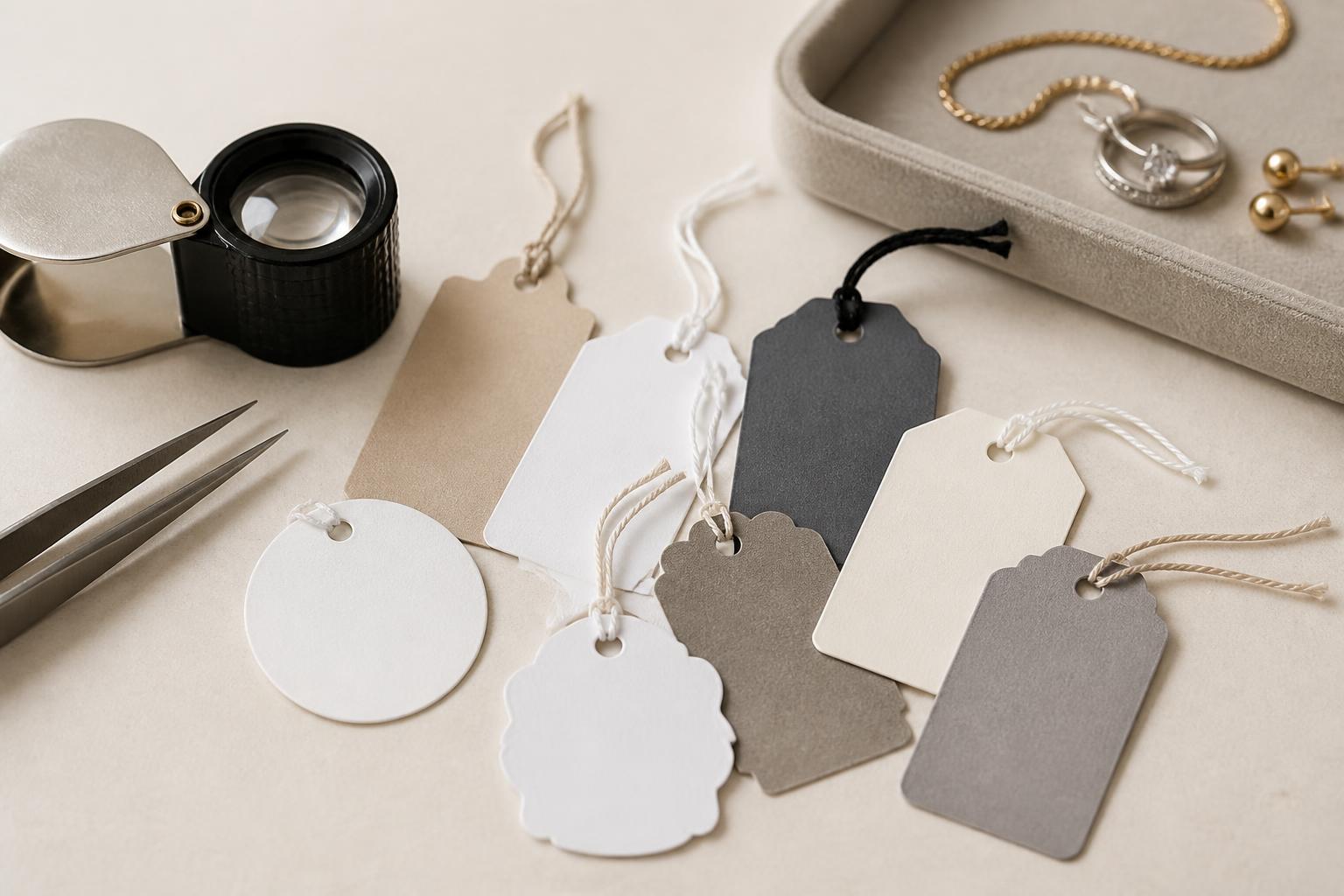
Jewelry hang tag identification starts with reading the tag itself: shape, material, wording, and how it is attached to the piece. If the tag is unclear, damaged, or missing, you can still narrow it down by checking the chain, clasp, hallmark, and overall construction.
The goal is simple: determine whether the hang tag is a retail tag, inventory tag, metal purity tag, designer tag, or a repair/service tag, then use that information to judge the jewelry more accurately.
What a jewelry hang tag usually tells you
A hang tag is a small label attached to jewelry for identification, pricing, or inventory. It may show metal content, weight, style number, barcode, SKU, stone details, or a brand name. In resale and valuation, the tag is helpful, but it is not proof by itself.
| Tag type | Common clues | Why it matters |
|---|---|---|
| Retail price tag | Price, barcode, style number | Useful for store records, not a valuation guarantee |
| Metal-content tag | 14K, 18K, 925, GF, HGE | Can help identify material and estimate value |
| Designer or brand tag | Brand name, collection, model code | May affect resale value if authentic |
| Repair or service tag | Shop notes, ticket numbers, dates | Helps trace history, but usually not value |
How to identify a hang tag step by step
- Check the material. Look for paper, plastic, metal, or woven labels. Paper tags are common for retail, while metal tags may be used for higher-end items or inventory systems.
- Read all visible markings. Note numbers, letters, logos, purity marks, and any weight or style information. Do not assume a code is a hallmark until you verify the context.
- Separate tag info from jewelry marks. A tag may say one thing, while the piece itself has a different metal stamp. The actual jewelry marking is usually more important for value.
- Inspect the attachment. String, wire, plastic loop, or clipped fastener can hint at whether the tag came from a store, repair bench, or resale lot.
- Compare tag details to the item. If the tag says sterling silver but the piece looks plated, scratched, or very lightweight, keep investigating.
Common markings you may see
Some markings are straightforward, while others are easy to misread. Here are a few common examples:
- 14K, 18K, 10K: gold purity indicators on the tag or the jewelry itself.
- 925: sterling silver content.
- GF: gold filled, which is different from solid gold.
- HGE or HE: heavy gold electroplate, usually not solid gold.
- Style number or SKU: internal inventory code, often useful only if matched to a seller’s records.
- Weight or gram figure: may support valuation, but always confirm whether it refers to the item, the stone, or the full tagged lot.
If you are comparing markings and material types, related valuation pages can help you understand the difference between gold-filled and solid metal items, such as Gold Filled Jewelry Value: What It’s Worth and How to Estimate It and 14kt White Gold Price: What It Means and How to Estimate Value.
Value factors that matter more than the tag alone
A hang tag can support identification, but the jewelry’s real value depends on the piece itself. Use the tag as one clue, not the final answer.
| Factor | What to look for | Effect on value |
|---|---|---|
| Metal type | Gold, silver, gold-filled, plated, vermeil | Often the biggest driver of scrap or resale value |
| Purity mark | 10K, 14K, 18K, 925 | Higher purity can mean higher material value |
| Weight | Exact gram or ounce weight | Critical for precious metal estimates |
| Condition | Wear, bends, missing stones, repairs | Can raise or lower resale value |
| Brand and style | Designer name, collection, demand | May matter more than metal in some cases |
| Gemstones | Natural, lab-grown, treated, or imitation | Can materially change total value |
For precious metal items, it may also help to compare current market references such as 10k Gold Scrap Prices: How to Check What It Is Worth, 14k Gold Price Today: How to Check What It Is Worth, or Sterling Silver Price Today: How to Check What It Is Worth.
Photo tips for clearer identification
Good photos make jewelry hang tag identification much easier, especially if you are asking a buyer, appraiser, or resale specialist for help.
- Use bright natural light or soft white lighting.
- Place the tag flat and keep the jewelry visible beside it.
- Take one close photo and one wider photo for context.
- Focus on the entire tag, including edges and fasteners.
- Photograph both sides if the tag has text on the back.
- Include a ruler or coin only if size context helps and does not block details.
- Avoid flash glare on shiny metal or plastic tags.
Tip: If the tag is faded, photograph it at different angles. Sometimes the imprint becomes readable when light hits from the side.
Warning signs that the tag may be misleading
Not every hang tag is current, accurate, or original to the jewelry. Watch for these issues before making a value decision:
- The tag looks newer than the jewelry.
- The wording references a metal grade that does not match the piece.
- The string, loop, or fastener looks replaced or reattached.
- The tag shows a retail price that is probably outdated.
- The item has been resized, repaired, or combined with other parts.
- The tag uses vague wording such as “gold tone” or “silver tone,” which usually does not mean solid precious metal.
If you suspect the piece is sterling silver, current silver references can help you compare the tag to the item, including Sterling Silver Price Per Ounce: What It Means and How to Check Value.
Quick checklist before you value the piece
- What does the hang tag actually say?
- Does the jewelry itself carry the same mark?
- Is the metal solid, plated, gold-filled, or sterling silver?
- Do you have a weight measurement?
- Are there gemstones, brand markings, or model numbers?
- Is the tag original, or could it have been switched?
- Do photos clearly show both the tag and the item?
When to get a second opinion
If the tag information conflicts with the jewelry’s appearance, or if the item may have collectible or designer value, a professional review is worth considering. This is especially true for pieces with diamonds, branded settings, or unusual construction. In some cases, a jewelry appraisal service can help confirm what the tag means and whether the piece should be treated as fine jewelry, fashion jewelry, or scrap.
For pieces with diamonds, you may also want to compare the tag details with broader market context, such as Price of Diamond Over Time: How to Check What It Is Worth.
FAQ
What is the difference between a hang tag and a hallmark?
A hang tag is attached labeling, while a hallmark is a mark engraved or stamped on the jewelry itself. Hallmarks usually carry more weight for identification and valuation.
Can I trust a tag that says 14K or 925?
It is a useful clue, but you should still verify the jewelry itself. Tags can be swapped, outdated, or wrong, especially in resale lots or repaired pieces.
What if the tag is unreadable?
Look at the jewelry’s own marks, weight, construction, clasp type, and overall wear. Good photos from several angles can also help a specialist identify it more accurately.
Should I value the item by the price on the tag?
Usually no. Retail prices, especially on older tags, do not reflect current resale or scrap value. Use the tag as reference data, not as final proof of worth.
A practical next step
If you have a tag and want a better reading before you sell, insure, or sort the piece, start with clear photos and the exact wording on the tag and the jewelry itself. Then compare the material clues to reliable market references and, if needed, use a specialized tool to organize what you see.
For a fast way to document and review jewelry details, you can try the Jewelry Identifier Lumagem app from Jewelry Value Finder.
If you want a broader valuation check after identification, a separate appraisal or market comparison may be the best next step.
CTA: Use Jewelry Value Finder to turn a confusing hang tag into a clearer jewelry identification path—then compare it with the piece, the marks, and the market.
Try the LumaGem app
Use the app when you want a faster, more organized starting point before comparing details manually.