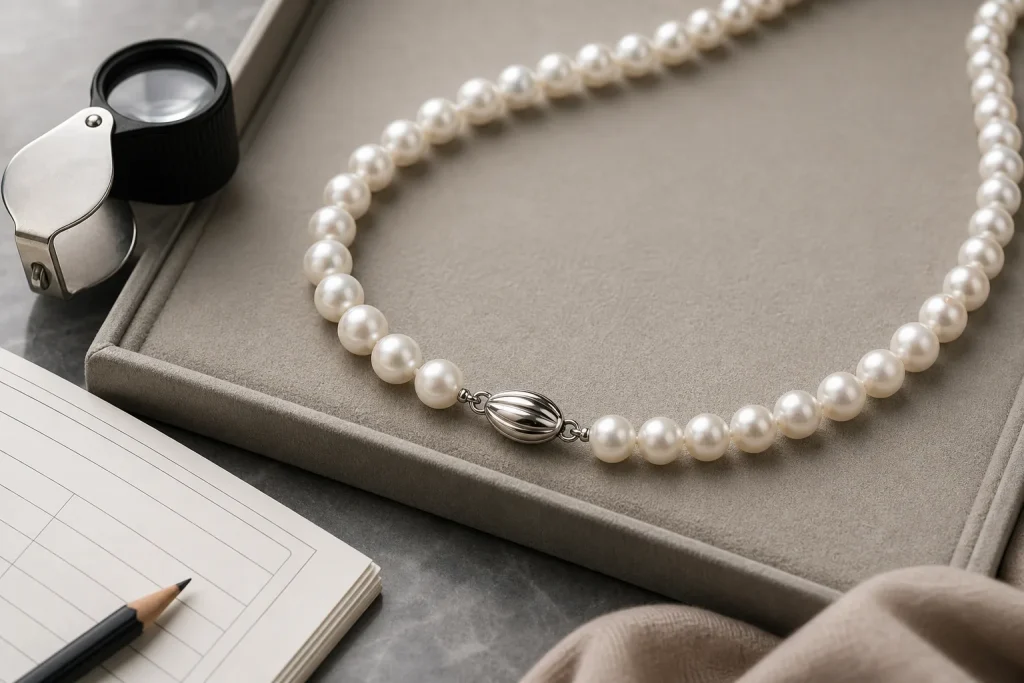
The price of a real pearl necklace can run from about $100 to $10,000 or more. That spread is normal: “real” includes cultured freshwater and saltwater pearls, while exceptional matching, luster, size, provenance, and luxury branding can move a strand far higher. Source (accessed 2026-08-12)
The useful question is not simply whether a necklace is real. It is: what kind of pearl is it, how well are the pearls matched, what is the necklace’s condition and construction, and are you looking at a retail asking price or the amount it may bring on resale?
Start with what “real pearl” means
A cultured pearl is a real pearl. It forms inside a mollusk after human intervention begins the process. A natural pearl forms without that intervention and is much less commonly encountered. Imitation pearls may look convincing in photographs but are made from other materials rather than formed by a mollusk. Identifying natural, cultured, imitation, and treated pearls may require examination by a qualified laboratory. Source (accessed 2026-08-12)
For most shoppers, a “real pearl necklace” means a cultured-pearl strand. That is not a lesser category; it is the normal market category. Do not pay a premium for a seller’s use of “genuine” or “real” alone. Ask for the pearl type, size range, origin claim if offered, strand length, clasp metal, and return terms.
Current price signals by pearl type
There is no universal price list for pearl strands. Retail examples are useful only when the type, size, quality description, length, clasp, and seller terms are comparable. The examples below are listed prices from specialist sellers, not appraisals or guarantees of what another necklace is worth.
| Pearl category | What usually separates it | Useful current price signal | How to compare fairly |
|---|---|---|---|
| Freshwater | Often the accessible entry point, with wide variation in shape, luster, and matching. | A specialist listing showed a white freshwater strand described as AAA at $330. | Compare strand length, pearl size, surface appearance, clasp, and whether the photographed strand is the one shipped. |
| Akoya | Known for classic round white strands and sharp-looking luster when quality is high. | A specialist listing showed a Japanese Akoya white strand described as AAA at $1,910. | Check whether the description identifies Akoya clearly and whether it explains quality terms rather than relying on a grade alone. |
| Tahitian | Usually valued for darker body colors and overtone, with matching across a full strand especially important. | Request a live, item-specific quote rather than treating a broad web range as a valuation. | Compare body color, overtone, shape, diameter range, surface, and whether the strand is graduated. |
| South Sea | Often associated with larger white or golden cultured pearls, but quality differences are substantial. | Request a live, item-specific quote and inspect the exact strand or detailed images. | Compare size range with luster, surface, matching, nacre appearance, clasp, and seller documentation. |
The freshwater and Akoya examples above come from one seller’s published listings and should be read as market snapshots, not a grading conversion. Source (accessed 2026-08-12)
At the luxury end, brand, design, materials, rarity, and presentation can matter as much as the basic pearl category. A luxury retailer’s necklace category displayed prices from $2,600 to $2,000,000, illustrating why a single “average pearl necklace price” is not a dependable buying or valuation tool. Source (accessed 2026-08-12)
What makes one strand cost more than another
-
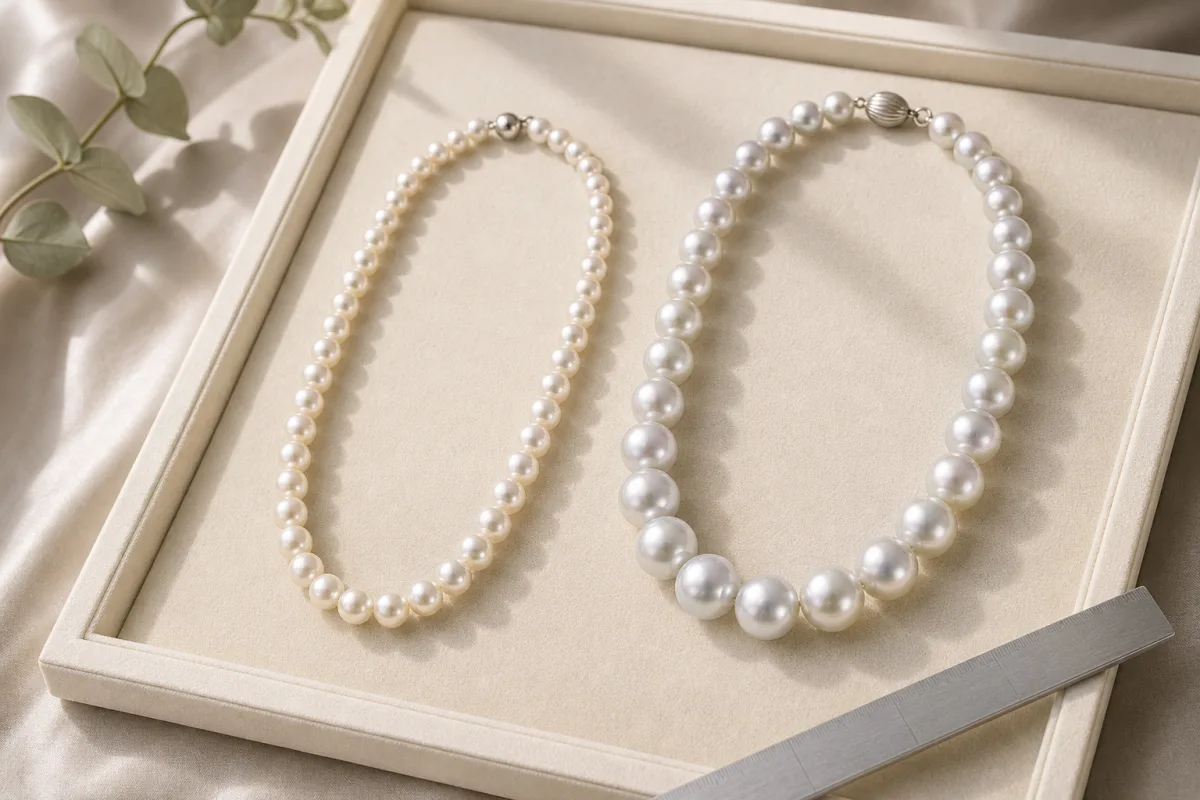
Luster is the crispness and depth of reflections. It is often more visually important than a small difference in diameter. Source (accessed 2026-08-12)
-
Surface matters. Small natural characteristics can be expected, but conspicuous pits, chips, peeling, or worn coating lower desirability and may signal condition concerns.
-
Matching is a major strand issue. Look across the whole necklace for consistency of color, overtone, shape, luster, and size progression. A beautiful loose pearl does not automatically make a valuable necklace.
-
Size matters in context. Larger pearls can cost more, but large pearls with weak luster, poor surfaces, or uneven matching may compare poorly with a finer smaller strand.
-
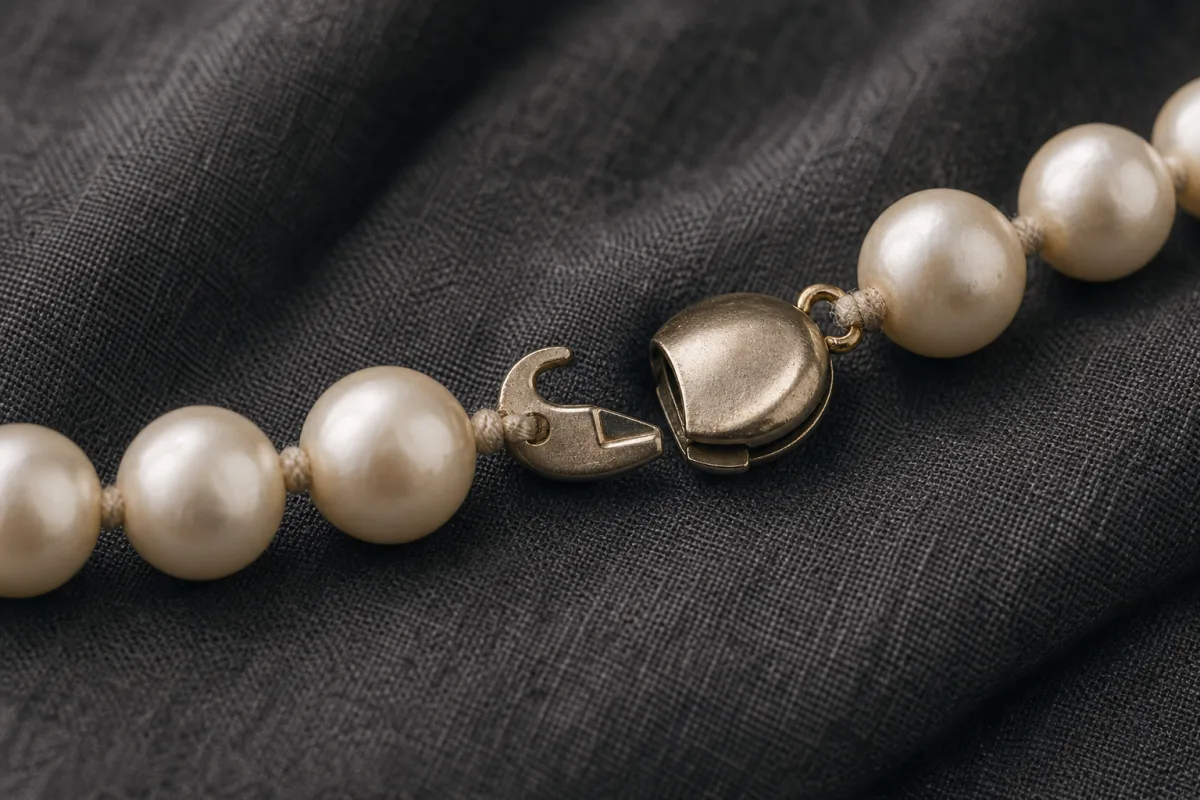
Construction matters. Inspect the clasp, metal marks, attachment points, thread condition, knotting, and any signs of restringing. A precious-metal clasp has separate material value from the pearls.
-
Seller terminology matters. Labels such as AAA or AAAA are used in retail, but they are not a universal grading language. Read the actual description and images rather than assuming grades match across sellers. A retailer listing, for example, described an 11.5-12.5mm strand as AAAA and listed it at $1,600. Source (accessed 2026-08-12)
Retail, replacement, appraisal, and resale are different numbers
A retail listing is a seller’s current asking price. A replacement figure is intended to help replace an item of similar type and quality. An appraisal is an opinion made for a stated purpose and date. A resale estimate asks what a secondhand buyer may actually pay. These are different questions, so do not assume an inherited strand should sell for its original store price.
For a vintage or inherited necklace, begin with evidence rather than a family description. Photograph the whole strand in daylight, the clasp front and back, every stamp, damaged areas, and any box, receipt, certificate, or prior appraisal. Record whether the strand is uniform or graduated and whether it has recently been restrung. You can use this jewelry search method to organize marks, materials, and comparison clues, and browse related jewelry value guides before seeking a formal opinion.
Condition is particularly important with older pearl strands. Loose thread, gaps between pearls, discolored silk, damaged drill holes, and flaking surfaces may affect wearability and the cost of restoration. Do not clean a questionable strand aggressively before it is documented.
A practical way to compare listings
-
Separate cultured-pearl listings from claims of natural origin. Treat an unsupported “natural” claim as unverified.
-
Write down the exact pearl category and every supplied measurement. Do not compare a graduated strand with a uniform strand as if they were equivalent.
-
Compare close photographs for luster, surface, shape, and matching. Request a video in diffuse light if listing images hide reflections.
-
Identify the clasp metal and any maker mark. If a mark is unclear, use this reference on identifying jewelry tags and markings to prepare better photos and search terms.
-
Read the warranty, return window, shipping terms, and any statement describing who issued a certificate. A document may identify an item, but it does not by itself establish a resale result.
-
For a costly purchase, compare like-for-like offers from more than one reputable pearl specialist or jeweler before deciding.
Can you tell at home whether pearls are genuine?
Home inspection can help you notice obvious imitation or damage, but it cannot reliably establish pearl origin, treatment history, or precise value. Look for consistent drilling, the way the surface meets drill holes, natural-looking variation across the strand, and quality of luster. Avoid destructive tests, harsh chemicals, and scraping. Laboratory examination is the appropriate route when a natural-origin claim, an insurance decision, an estate issue, or a high-value purchase depends on the answer. Source (accessed 2026-08-12)
Is price per gram useful for pearl necklaces?
Usually not by itself. A pearl necklace is valued as matched jewelry, not as bulk material. Price per gram ignores type, luster, surface, shape, matching, drill quality, strand design, clasp, condition, and provenance. Use it only as a secondary observation after comparing the necklace itself.
Is a single-pearl necklace priced the same way as a strand?
No. A pendant or single-pearl necklace may concentrate value in one pearl, its setting, and any designer or brand attribution. A strand also depends heavily on matching and construction across many pearls, so direct comparison is unreliable.
When is an appraisal or laboratory report worthwhile?
Consider professional help when the necklace is being insured, divided in an estate, sold as potentially natural, offered at a substantial price, or accompanied by claims that cannot be verified from the piece and documentation. Ask in advance what question the report will answer: identification, insurance replacement, fair-market opinion, or natural-versus-cultured determination.
Use identification before assigning a value
LumaGem can be a useful starting point for organizing photographs and observable details of a necklace, especially its clasp, markings, pearl appearance, and condition. Treat any preliminary identification as a lead to verify against the actual piece, seller documentation, and—when the stakes justify it—a qualified professional. For necklaces with gold components, separate the clasp’s metal evidence from the pearl assessment; this explanation of gold-filled jewelry value may help prevent confusing a surface marking with solid-gold content.
The best price decision comes from a specific description, comparable current listings, and a clear purpose. Buy based on the quality you can see and return if necessary; value an inherited necklace based on identified facts and condition; and do not let the word “real” substitute for either.