Jewelry Value Guide
How to Search for Jewelry by Mark, Material, and Value
Learn how to search for jewelry using marks, materials, photos, and app tools to narrow value, identify pieces, and avoid common mistakes.
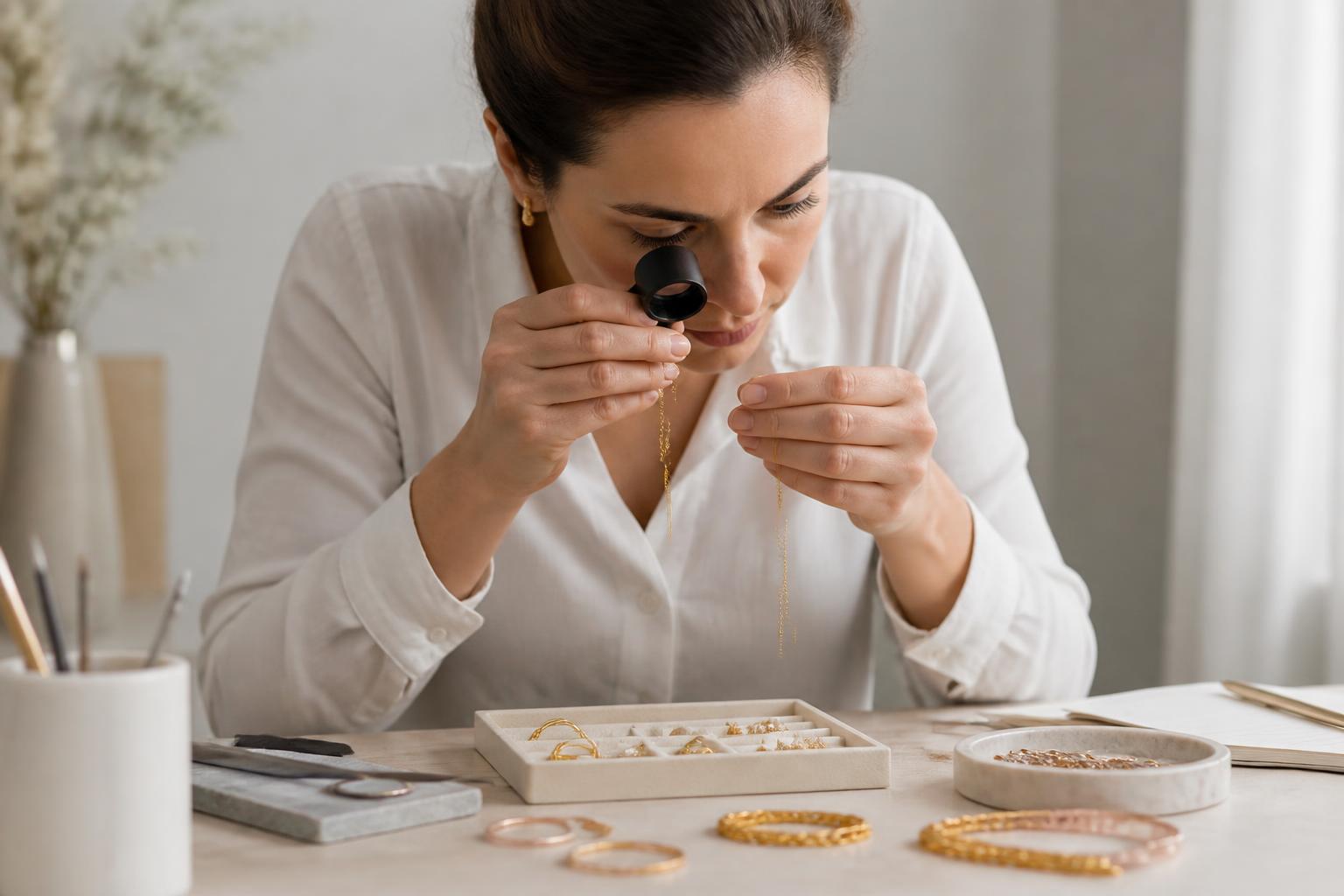
If you want to search for jewelry, start with the clues already on the piece: stamps, metal color, weight, gemstone appearance, and how it was made. Those details can narrow the type of jewelry, the likely material, and the next step for estimating value. If you are trying to identify a piece faster, a photo-based tool such as the Jewelry Identifier: LumaGem can help organize what you see before you compare it with trusted references.
The best search is methodical. Read the marks, confirm the material, photograph the details, and then compare the piece against valuation pages such as What 750 Stamped Gold Means in Jewelry or How to Identify Jewelry Hang Tags Clearly when those clues are present.
What to check first
Start with the parts of the jewelry that are easiest to verify. A stamp, clasp style, or gemstone setting can tell you more than the overall look. The fact is that many pieces are made from plated, filled, or solid materials that look similar at a glance. The reading of that fact is that you should not guess from color alone.
- Look for stamps: Common marks include karat numbers, sterling marks, and maker marks.
- Check the clasp and construction: A solid chain often wears differently from plated jewelry.
- Inspect stones: Cut, setting style, and wear can help separate costume pieces from fine jewelry.
- Note weight and feel: Weight can support a material estimate, but it does not prove purity by itself.
When a piece is stamped, the stamp is one clue, not the whole answer. A mark such as 750 indicates a gold standard used in many markets. The reading of that mark is that the item may be 18 karat gold, but the metal should still be verified before any value estimate.
How to read common jewelry clues
| Clue | What it is | What it may mean | Next step |
|---|---|---|---|
| 750 | A fineness mark | Often indicates 18 karat gold | Confirm with other marks and test methods |
| 925 | A sterling silver mark | Often indicates sterling silver | Check wear, magnet response, and weight |
| 14K | A karat mark | Often indicates 14 karat gold | Compare with known gold pricing references |
| HGE | A gold electroplate style mark | Usually points to plated jewelry | Do not treat it as solid gold |
Marks can be helpful, but there are exceptions. A worn stamp may be hard to read. A fake stamp can be added to a piece that is not what it claims to be. The practical reading is that the stamp should guide your search, not end it.
Photo tips that make a search more accurate
Good photos reduce mistakes. The fact is that small details often get lost in poor lighting. The reading of that fact is that clear images can improve identification before you compare values or listings.
- Use daylight or soft white light.
- Take one full-piece photo and several close-ups.
- Capture every stamp, tag, clasp, and stone setting.
- Keep the background plain so the piece stands out.
- Include a ruler or coin for scale if the site or app asks for it.
If you plan to use a jewelry identifier app, photograph the front, back, and any markings separately. That gives the tool better inputs and makes your own comparison easier afterward.
Value factors that matter most
Jewelry value depends on more than appearance. Material is usually the first factor. Condition, brand, gemstone quality, and market demand can change the result. The fact is that a scratched ring and a clean ring made from the same metal may not sell for the same amount. The reading of that fact is that condition can affect resale value, even when melt value stays tied to metal content.
Common value drivers
- Metal type: Solid gold, sterling silver, gold-filled, and plated jewelry all price differently.
- Purity: Higher karat gold generally contains more gold content.
- Gemstones: Diamond quality, size, and condition influence value. See Diamond Prices Over Time for a broader pricing context.
- Brand and design: Signed pieces may have collector demand.
- Wear and repair: Bent prongs, broken clasps, and missing stones reduce buyer interest.
For gold, pricing pages like 10k Gold Scrap Prices, Scrap 14k Gold Price, and 14k Gold Price Per Ounce can help you compare melt-based estimates. Those pages are useful when the question is what the metal may be worth, not what a retail buyer may list it for.
Useful search paths by jewelry type
Different pieces need different searches. A necklace chain, a ring, and a bracelet may share a metal but not a market. The fact is that the best search term changes with the item. The reading of that fact is that specificity improves results.
- Gold jewelry: Search by karat mark, weight, and whether the item is solid, filled, or plated.
- Silver jewelry: Search by sterling mark, maker mark, and condition. For pricing context, use Sterling Silver Price Today or Sterling Silver Price Per Ounce.
- Gold-filled pieces: Search by the fill mark and construction type. Value guidance is covered in Gold Filled Jewelry Value and Gold Filled Price Per Gram.
- White gold: Search by karat and alloy clues. For an estimate framework, see 14kt White Gold Price.
If a ring looks like a specific brand or style, search the exact stamp, then the setting style, then the shape of the stone. That order usually works better than starting with a broad phrase like “nice ring.”
Step-by-step checklist
- Clean the piece gently with a soft cloth.
- Photograph the front, back, clasp, and all marks.
- Write down every stamp exactly as it appears.
- Separate what you can verify from what you are guessing.
- Search the stamp plus the item type.
- Compare the piece with pages that match the material.
- If the piece seems valuable, consider a professional appraisal or a local buyer quote.
Use this checklist when you are comparing multiple items from an estate, a jewelry box, or a resale lot. It keeps the process consistent and helps you avoid treating a guess like a fact.
When a hang tag changes the search
A hang tag can carry the model, metal, or retailer information that is missing from the jewelry itself. The fact is that tags are often easier to read than worn hallmarks. The reading of that fact is that a tag can speed up identification, but only if it matches the item. For a closer look at tag details, use How to Identify Jewelry Hang Tags Clearly.
Be careful with old tags that may not belong to the piece anymore. A detached tag can be useful evidence, but it should not be assumed to prove authenticity on its own.
What to avoid
- Do not call every yellow metal piece gold.
- Do not trust a stamp without checking the construction.
- Do not use polished reflections as proof of purity.
- Do not assume a gemstone is natural, treated, or valuable from color alone.
- Do not rely on fake hallmarks or decorative marks as if they were standard marks.
These mistakes matter because they can send your search in the wrong direction. A careful search for jewelry is about narrowing possibilities with evidence, not forcing a quick answer.
When to ask for a second opinion
If a piece has a clear precious-metal mark, a potentially important gemstone, or a signed design, a second opinion can be worth the time. If the item is damaged, unusual, or hard to read, a professional can help confirm what the marks and construction suggest. Bring photos, the exact stamp, and any purchase or inheritance details you have.
If you want a faster first pass before you decide what to do next, try the Jewelry Identifier: LumaGem app, then compare the result with the material-specific pages on Jewelry Value Finder.
FAQ
What is the fastest way to search for jewelry?
The fastest method is to check the stamp, photograph the piece, and search the exact mark with the item type. That sequence gives you a better starting point than searching by appearance alone.
Can I identify jewelry from a single photo?
Sometimes you can narrow it down from one clear photo, but a single image is often not enough for a reliable material or value estimate. Multiple angles and close-ups of the marks usually work better.
Does a stamp prove the jewelry is real?
No. A stamp is evidence, not final proof. The reading of the stamp should be confirmed with the construction, weight, wear pattern, and other marks before you make a value decision.
Should I search by brand name or by metal first?
Search by metal first when the stamp is visible. Search by brand first when the piece has a clear maker mark or designer tag. The best order depends on which clue is most reliable on that item.
Next step
If you are ready to move from guessing to sorting, start with the marks, take clean photos, and compare the piece with the right material guide. Jewelry Value Finder can help you turn a vague search into a more informed estimate.
CTA: Open the Jewelry Identifier: LumaGem app, then use the matching Jewelry Value Finder guide to review marks, material, and likely value.
Try the LumaGem app
Use the app when you want a faster, more organized starting point before comparing details manually.