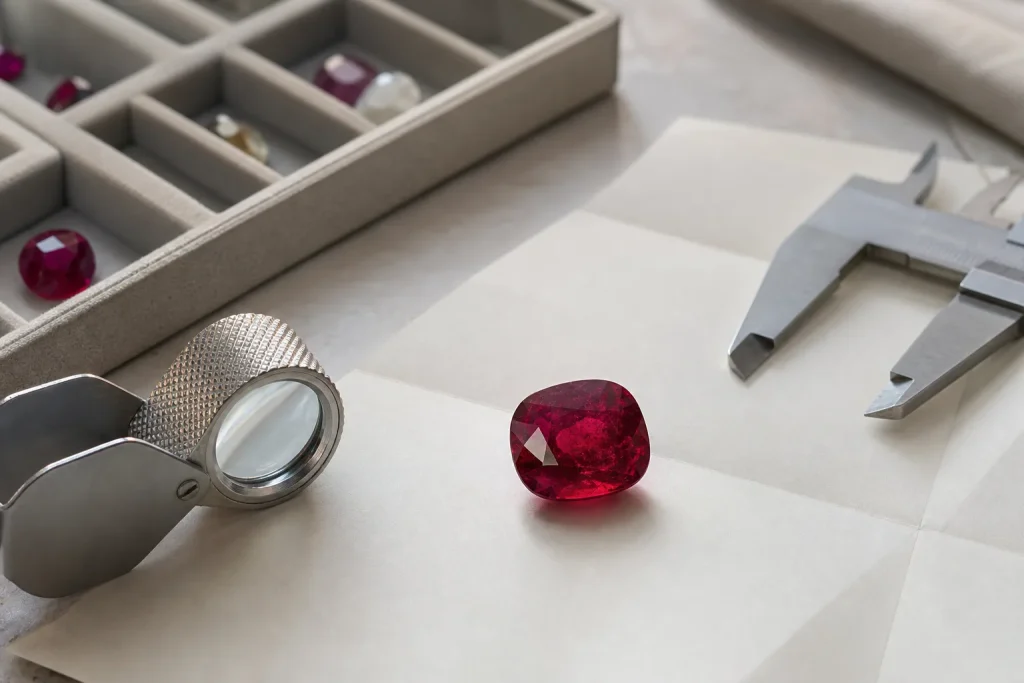
The price of a ruby gemstone has no single fixed rate. A natural ruby’s value can range widely because color, transparency, size, cut, treatments, origin evidence, and the type of sale all matter. Treat a listed price as the price of that particular stone in that particular market—not as a universal ruby rate. Source (accessed 2026-08-24)
Start with the price context
Before comparing prices, identify what the number represents. A loose-stone retail asking price is different from the price of a finished ring, an insurance replacement valuation, an auction result, or a dealer’s resale offer. A ring price also includes its metal, accent stones, design, labor, retailer margin, and sometimes a brand premium. Resale offers are commonly lower than retail asking prices because the buyer takes on selling costs and market risk. Source (accessed 2026-08-24)
For an initial identification, LumaGem can help you organize visible details such as apparent color, setting, hallmarks, dimensions, and photographs. It cannot confirm natural origin, treatment, geographic origin, or a precise market value from images alone. Those questions may require laboratory testing and an in-person gemological examination. Source (accessed 2026-08-24)
What a one-carat ruby might cost
A one-carat ruby can be inexpensive or extremely valuable, so carat weight alone is not enough to estimate price. Small rubies may be priced at a lower rate per carat than visually comparable larger stones, while a fine natural ruby can become much more valuable as size increases. Ask for both the total price and the seller’s stated price per carat, then compare stones with similar treatment, color, transparency, shape, and documentation. Source (accessed 2026-08-24)
Illustrative retail examples, not market averages
Observed retailer listings show why broad price claims need context. One listed round ruby weighed 0.45 carat and was offered at $1,755, while a listed heart-shaped ruby weighed 1.28 carat and was offered at $21,120. These are retailer asking prices for named listings, not independent appraisals, resale offers, or general price bands for all rubies. Their difference should not be attributed to size alone. Source (accessed 2026-08-24)
-
Commercial range: stones may have weaker color, reduced transparency, visible inclusions, less precise cutting, treatment, or limited documentation. Compare several like-for-like listings rather than relying on a label.
-
Good range: look for an attractive red appearance, reasonable cutting, disclosed treatment, and enough photos or video to judge transparency and extinction.
-
Fine range: stronger, more balanced color and transparency, a better cut, larger size, and credible laboratory documentation can materially change the asking price. Source (accessed 2026-08-24)
-
Exceptional range: rare stones with exceptional quality, important provenance, and respected reports are not sensible benchmarks for an ordinary retail purchase. Source (accessed 2026-08-24)
Why apparently similar rubies can have very different prices
Ruby is the red variety of corundum. The most valued appearance is often described through hue, tone, and saturation: the red color itself, how light or dark it appears, and how vivid or grayish or brownish it looks. Transparency matters too. Inclusions are normal in natural rubies, but obvious fractures, cloudiness, or poor transparency can affect both beauty and value. Cut affects brightness, face-up size, and whether the stone shows overly dark areas. Source (accessed 2026-08-24)
Do not judge color from one heavily edited photograph. Request daylight and neutral-light images, a video that turns the stone, exact measurements, and a view showing inclusions or surface-reaching fractures. A carat figure describes weight; measurements show how large the ruby actually looks when set in jewelry.
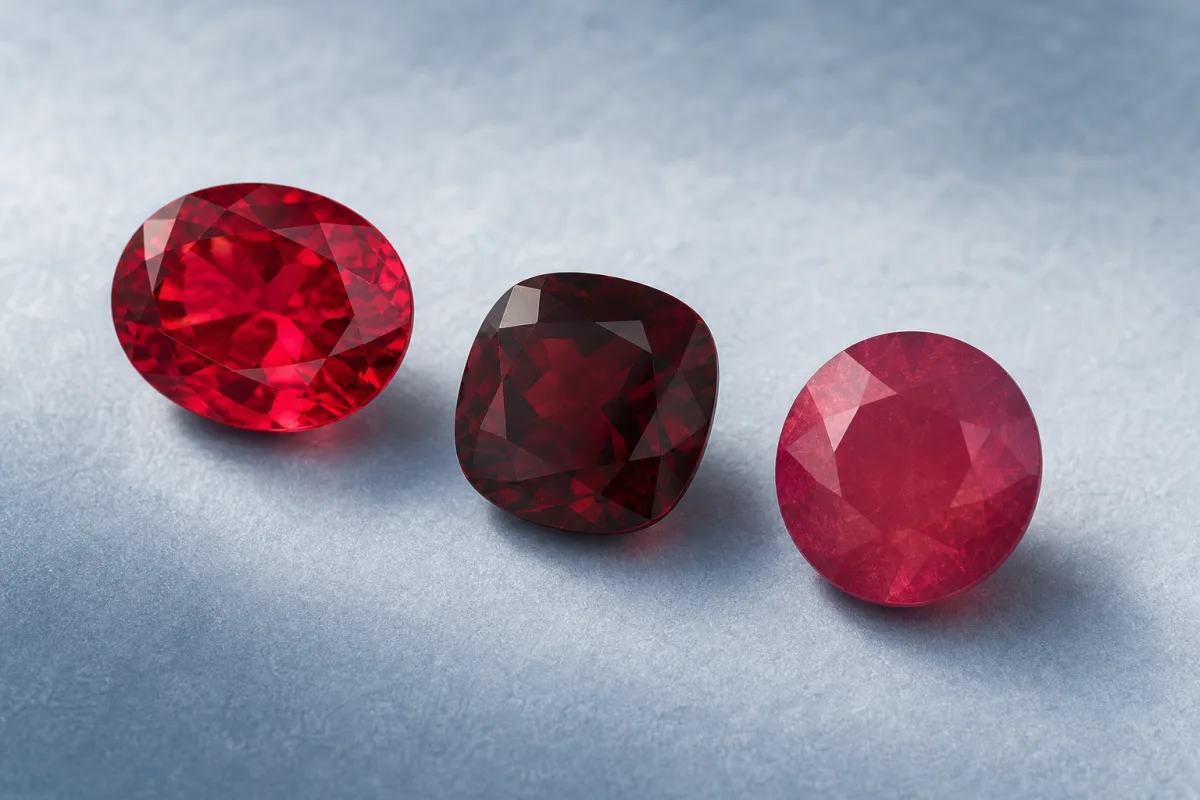
Treatment can matter as much as appearance
Heat treatment is common in ruby and must be disclosed. Heating can improve color or clarity, but an untreated natural ruby with comparable visual quality is generally scarcer and may command more. Other treatment types, including fracture filling or diffusion, can have different durability and value implications. Do not assume that “natural” means untreated: natural describes the material’s origin, while treatment describes what was done to it after mining. Source (accessed 2026-08-24)
For a meaningful comparison, place each listing into the same treatment group: untreated natural, heated natural, or otherwise treated natural. If treatment is absent from the listing, ask the seller directly and keep the answer with the invoice. A laboratory report is especially useful when treatment status is important to your buying decision. Source (accessed 2026-08-24)
Origin claims need evidence
Terms such as Burmese and Mozambique can influence demand, but origin should not be treated as proven because of a seller description or a ruby’s color. Geographic origin opinions are made from gemological evidence and may be stated by qualified laboratories; even then, origin is only one part of value. A documented ruby with less celebrated origin can be a better purchase than an undocumented stone marketed with a prestigious origin name. Source (accessed 2026-08-24)
Natural, synthetic, imitation, and composite ruby
A synthetic ruby has essentially the same chemical composition and crystal structure as natural ruby but was grown in a laboratory. An imitation only resembles ruby and may be a different material. Composite or assembled materials can combine components. These distinctions are fundamental to price, and they cannot reliably be settled from a phone photo, a setting stamp, or a quick visual comparison. Source (accessed 2026-08-24)
A jeweler may identify obvious signs or perform preliminary screening, but a formal determination can require a gemological laboratory. If you are considering an expensive purchase, ask what testing has actually been performed rather than accepting a vague statement that the stone is “real.”
Per carat, per gram, and total price
Ruby markets commonly discuss price per carat. The total stone price is the stated per-carat rate multiplied by the stone’s carat weight. A per-gram figure is simply a conversion of that per-carat figure, not a separate market category. Confirm whether a listing gives the weight of the center ruby only or the combined weight of several stones before doing any comparison.
For context on comparing colored-stone listings, see our emerald price per carat article. If the ruby is already mounted, our jewelry search method can help you record markings, materials, and identifying details without assuming that the setting proves the ruby’s identity.
Why auction records are not normal buying prices
Exceptional auction results can be informative about rarity but are poor shortcuts for pricing an ordinary ruby. GIA reports that a 25.59-carat ruby ring sold at auction in 2015 for $1,266,901 per carat. That result involved an extraordinary ring and auction setting; it does not establish the expected price of a loose ruby, a treated ruby, or a resale offer. Source (accessed 2026-08-24)
A practical way to compare a ruby listing
-
Confirm whether the stone is natural, synthetic, imitation, or composite.
-
Get the exact carat weight, measurements, shape, photographs, and video.
-
Ask for the treatment disclosure in writing, including whether the ruby is untreated, heated, or otherwise treated.
-
Read the laboratory report rather than relying only on a report number. Check that the report describes the same weight, shape, and measurements as the offered stone.
-
Separate the loose ruby price from the price of the mounting, diamonds, and any design or brand premium.
-
Read the return period, return costs, and whether an independent inspection is allowed.
For a ruby you own, photograph the stone in and out of direct light, record every hallmark, and retain receipts, reports, and repair history. If there is a significant price difference between possible identifications or treatment outcomes, seek an independent gemologist or laboratory before buying, insuring, or selling. You can also compare the way finished jewelry is valued in our pearl necklace value article and browse more jewelry value guides.
What to send for a more useful ruby identification
Provide sharp photos of the front, back, and side of the jewelry; a close image of any stamp; the ruby’s measurements if known; the total jewelry weight if known; paperwork; and the country or seller from which it was acquired. Include whether the question is retail replacement, insurance, estate division, or likely resale. Those are different value questions.