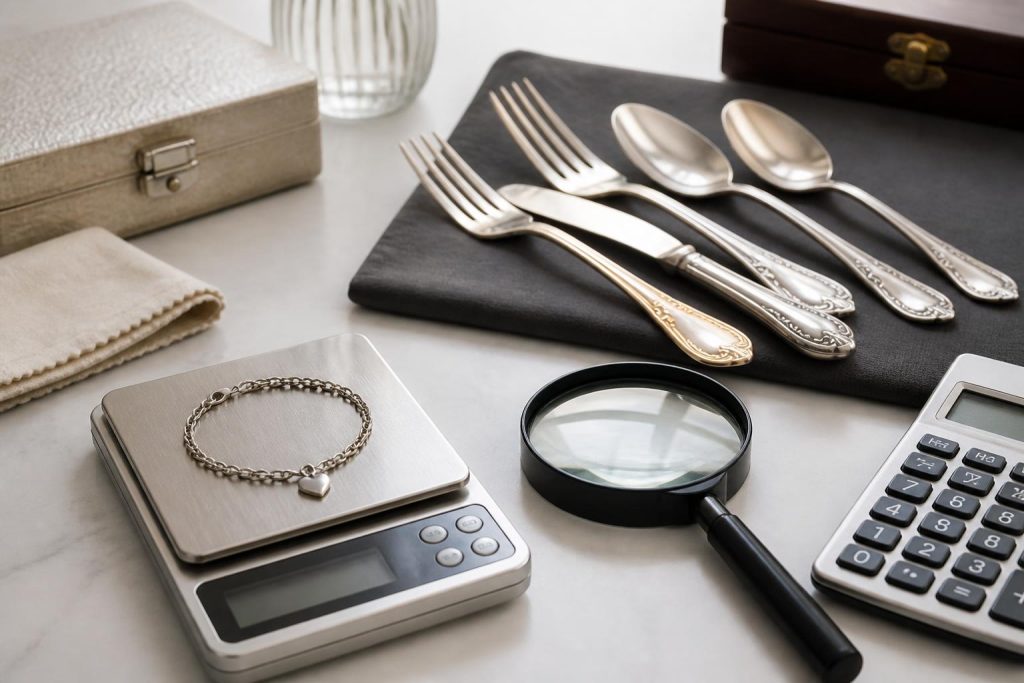
Jewelry Value Guide
Sterling Silver Price Per Ounce: What It Means and How to Check Value
Learn how the sterling silver price per ounce is calculated, what affects scrap value, and how to check what your silver jewelry, flatware, or coins may be worth.
If you are trying to understand the sterling silver price per ounce, the most important thing to know is that the market price of silver and the value of sterling silver items are not the same thing. Sterling silver is an alloy, so its worth depends on purity, weight, condition, and whether you are pricing jewelry, flatware, or scrap.
This guide explains how sterling silver value is commonly checked, what affects the number you see, and how to estimate what your piece may be worth before you sell, insure, or keep it.
What sterling silver price per ounce actually means
Sterling silver is usually 92.5% silver and 7.5% other metals, most often copper. Because it is not pure silver, the price per ounce of sterling silver is lower than the price per ounce of pure silver. In practical terms, sellers often refer to sterling silver value in one of two ways:
- Spot-based value: the metal value derived from the live silver market.
- Item value: the value of the finished piece, which may be higher if it has craftsmanship, brand recognition, or collectible appeal.
If you are checking silver for resale or scrap, the spot-based approach is the most useful starting point. If you are checking jewelry for insurance or a family piece for resale, finished-item value matters too.
How sterling silver is priced
The live silver market quotes pure silver, usually per troy ounce. Sterling silver contains less actual silver, so the pure metal content must be adjusted for the 92.5% purity. That means the sterling silver price per ounce is based on the silver content in the alloy, not the full ounce of metal as if it were pure silver.
Here is the basic idea:
- Pure silver market price is the starting point.
- Sterling silver contains 0.925 ounces of silver per 1 ounce of sterling alloy.
- Refiners, pawn shops, and buyers then apply their own deduction for processing and profit.
That is why quotes can vary from one buyer to another even when the market price is the same.
Quick value factors to check first
| Factor | Why it matters | What to look for |
|---|---|---|
| Purity mark | Confirms whether the item is sterling | Marks such as 925, Sterling, or Ster |
| Weight | Heavier pieces contain more metal value | Scale reading in grams or ounces |
| Condition | Affects jewelry resale value | Scratches, dents, missing stones |
| Brand or maker | Can increase finished-item value | Maker’s mark, designer stamp, documentation |
| Category | Jewelry, flatware, and scrap may be valued differently | Bracelet, ring, necklace, spoon, tray, etc. |
How to identify sterling silver correctly
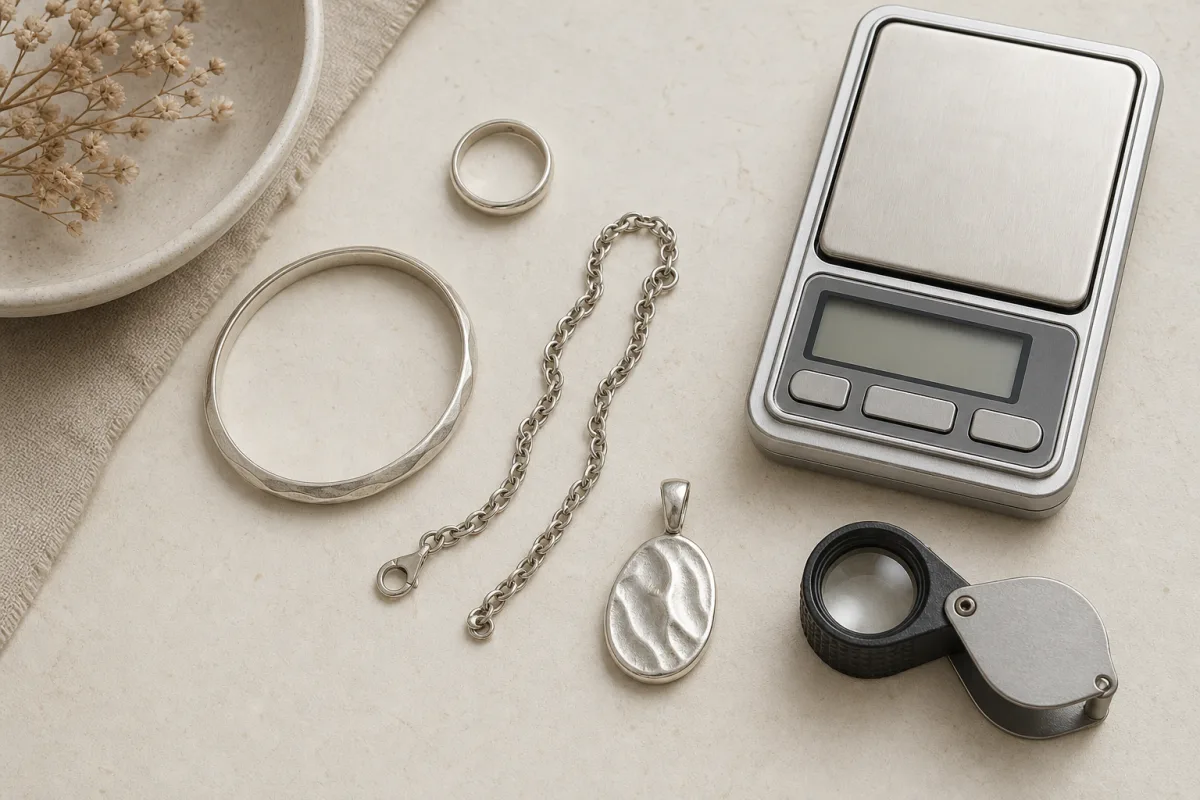
Start by checking for a hallmark or stamp. Common sterling silver marks include 925, .925, Sterling, and Ster. Some countries and makers use different formats, but the key point is that the marking should support the item being silver alloy rather than another metal.
Use caution with vague or suspicious marks. A stamp alone does not prove value if the piece is plated, repaired, or counterfeit. When in doubt, compare the hallmark with the item’s weight, look for signs of wear, and use a professional test if needed.
- Check the inside of rings and clasps.
- Look on the back of pendants, brooches, and earrings.
- Inspect flatware handles and the underside of serving pieces.
- Watch for plating language such as “EPNS,” “silver plate,” or “silver plated.”
Tip: If a piece is marked “925” but feels unusually light for its size, it is worth verifying the item before assuming it is solid sterling.
How to estimate sterling silver value at home
You can make a rough estimate with just a scale and the current silver market price. For a sterling item, the silver content is approximately 92.5% of the total weight. That means one ounce of sterling silver contains about 0.925 ounces of actual silver.
A simple estimate method:
- Weigh the item.
- Convert grams to troy ounces if needed.
- Multiply the total weight by 0.925 to estimate silver content.
- Multiply that figure by the current silver price per troy ounce.
- Expect an offer below the theoretical metal value if selling to a buyer.
If you are comparing multiple sterling pieces, this method helps you separate simple scrap value from pieces that may deserve a closer appraisal.
Why one sterling silver item can be worth more than another
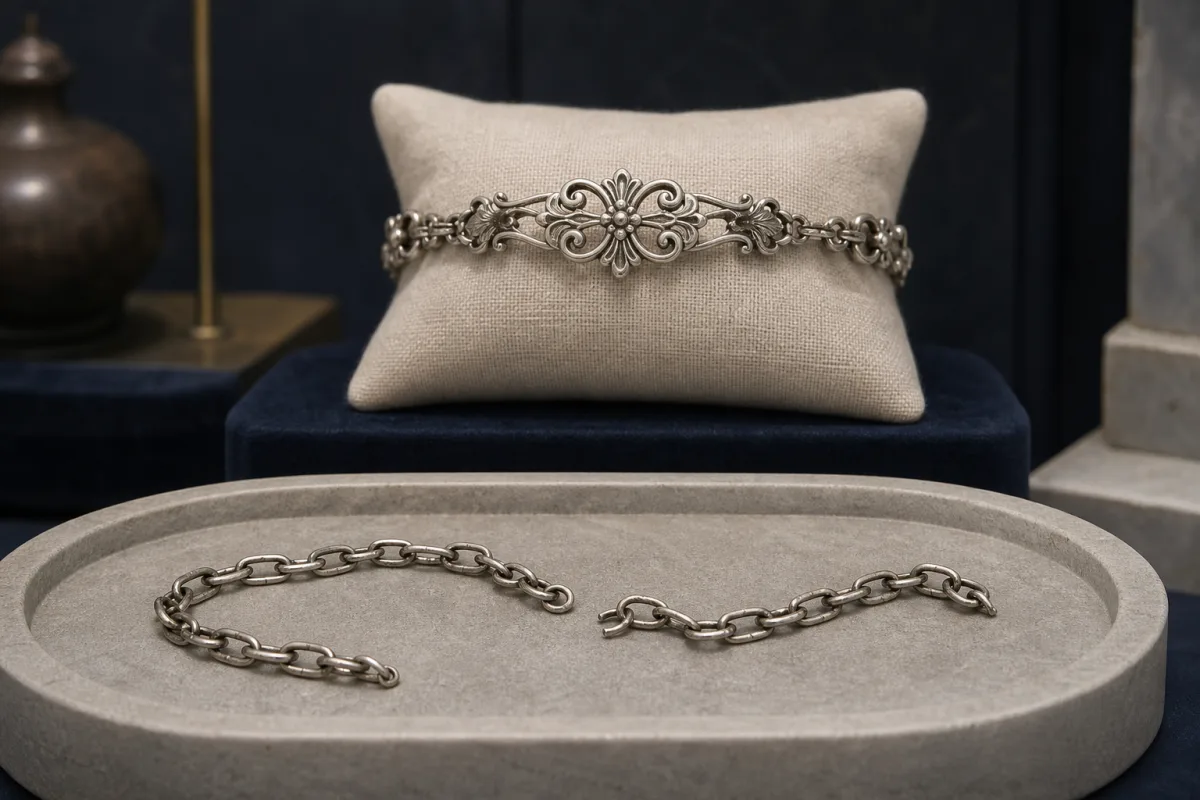
Not all sterling silver is priced by metal weight alone. A plain broken chain may be worth close to scrap value, while a signed designer bracelet, antique tea service, or complete flatware set may sell for more because of craftsmanship, age, or demand.
Common reasons value differs:
- Designer or luxury maker marks
- Antique or vintage status
- Matching sets and original packaging
- Intricate handwork or unusual design
- Condition, especially for collectible pieces
If you are unsure whether your item is simply scrap or potentially collectible, a jewelry appraisal service can help you separate metal value from market value.
Best ways to check what your sterling silver is worth
There are several practical ways to check value, depending on what you own and what you want to do next.
- For scrap pricing: compare the item’s silver content with the live market price and buyer margins.
- For jewelry resale: inspect brand, style, condition, and current demand.
- For mixed precious metals: separate pieces by type before estimating.
- For appraisals: document hallmarks, weight, and photos before requesting an opinion.
If you need help identifying a piece before pricing it, the Jewelry Value Finder can be a useful starting point for organizing what you have and comparing item types.
When a photo-based identification step helps
Photos can help you document hallmarks, maker marks, settings, and wear patterns before you decide whether a piece is scrap, wearable jewelry, or a collectible item. Clear images are especially useful when you are getting a second opinion or preparing to sell online.
For a fast mobile-first option, you can also try the Jewelry Identifier app on the App Store: download the app.
Common mistakes when checking sterling silver value
- Confusing sterling silver with silver plate
- Using gram-based estimates without converting correctly
- Assuming every 925 piece has collector value
- Ignoring buyer fees or refining deductions
- Trusting a mark without checking the full item
These mistakes can lead to unrealistic expectations. A careful check of hallmark, weight, and category is usually enough to narrow the value range substantially.
Related pricing pages worth comparing
If you are researching precious metals broadly, it may help to compare sterling silver with other common valuation topics such as Sterling Silver Price Today or look at how other metal prices are tracked, like 14k Gold Price Per Ounce. This gives you a better sense of how purity and market pricing affect jewelry and scrap value.
FAQ
Is sterling silver priced the same as pure silver?
No. Sterling silver contains 92.5% silver, so its metal value is lower than pure silver on an ounce-for-ounce basis.
Does every 925 piece have scrap value?
Most genuine sterling silver items have some metal value, but the amount depends on weight, purity, and the buyer’s payout terms.
Can sterling silver jewelry be worth more than scrap?
Yes. Designer, antique, or high-quality sterling jewelry may sell for more than melt value if demand is strong.
How do I know if my item is plated instead of sterling?
Look for plating marks and verify the hallmark, weight, and overall construction. If the piece is valuable or unclear, consider professional testing.
Final take
Checking the sterling silver price per ounce is a smart first step, but the real value of a piece depends on purity, weight, condition, and whether it has resale or collectible appeal. Use the market price as a baseline, then adjust for the item itself.
If you want a cleaner way to organize your jewelry research, compare items, and identify what might deserve a closer look, start with the Jewelry Value Finder or use the mobile app as a quick reference tool. That way, you can move from guesswork to a more confident valuation.
Try the Jewelryvaluefinder app
Use the app when you want a faster photo-based check before comparing details manually.