Jewelry Value Guide
14kt White Gold Price: What It Means and How to Estimate Value
Learn how to estimate 14kt white gold price by checking purity, weight, markings, and market context. Includes value factors, identification tips, and a simple checklist.
If you are trying to figure out the 14kt white gold price, the key is to separate the metal’s scrap value from the item’s full jewelry value. White gold is not a single fixed commodity, so its worth depends on karat purity, total weight, any gemstones, craftsmanship, and whether the piece is damaged or complete.
This guide explains how to estimate what 14kt white gold may be worth, what markings to look for, and how to avoid common mistakes when checking a ring, chain, bracelet, or earring. If you want a quicker starting point, you can also use the Jewelry Value Finder for a practical first estimate.
What 14kt white gold means
14kt gold is 58.5% pure gold mixed with other metals that add strength and change color. In white gold, the alloy typically includes metals such as nickel, palladium, or silver to create a pale, silvery look. Many pieces are also plated with rhodium, which can make the surface appear brighter and whiter than the metal underneath.
That matters because the 14kt white gold price is not the same as the price of pure gold. You are valuing only the gold content in the alloy, then adjusting for the piece’s condition and whether it has resale demand beyond melt value.
What affects 14kt white gold price
Several factors influence value. Some are easy to verify at home, while others require a jeweler or appraiser.
| Factor | Why it matters | What to check |
|---|---|---|
| Weight | Heavier pieces contain more gold content | Use a precise gram scale |
| Purity | 14kt means 58.5% gold | Look for stamps like 14K, 585, or 14KT |
| Condition | Damage can reduce resale value | Check for broken clasps, bends, or missing stones |
| Rhodium plating | Affects appearance, not gold content | Look for wear at edges or inside bands |
| Gemstones | May add or subtract value depending on quality | Identify stones and setting quality |
| Market demand | Finished jewelry may sell above melt value | Compare similar pieces, not just scrap rates |
For comparison, many readers also review 14k gold price per gram today or scrap 14k gold price articles to understand the relationship between melt value and everyday jewelry pricing.
How to estimate the value at home
You can make a reasonable estimate in a few steps. This will not replace a formal appraisal, but it is a solid way to get a practical range.
- Find the marking. Look inside rings, on clasps, or on the back of earrings for 14K, 585, or similar marks.
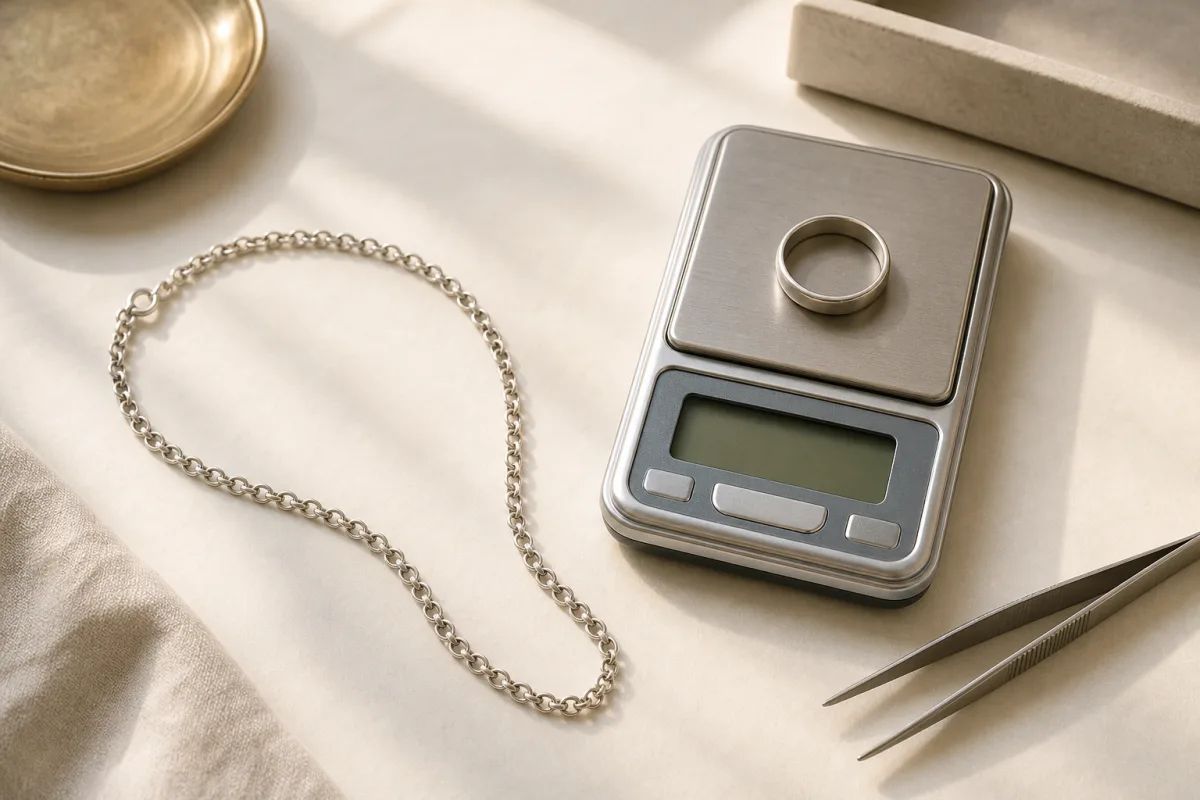
- Weigh the piece. Use a digital scale that measures in grams.
- Confirm whether stones are included. If the piece has gemstones, the metal weight may be lower than the total item weight.
- Check the current gold market context. White gold tracks gold value through its 14kt content, but retail resale is usually below store pricing.
- Adjust for condition. Broken or heavily worn items generally sell closer to scrap.
A simple formula for scrap-style estimates is:
Estimated gold value = item weight × 0.585 × current pure gold price per gram
Then subtract refining, buyer margin, or assay fees if you are comparing to a dealer offer. If you are evaluating a piece that looks more like plated or mixed-metal jewelry, it may be worth reviewing Gold Filled Price Per Gram as a comparison point.
How to identify real 14kt white gold
Not every pale-colored ring is solid 14kt white gold. Some items are gold filled, gold plated, or use low-value base metals with a similar look. Identification starts with markings, but markings alone are not proof.
- Look for common hallmarks: 14K, 14KT, 585, or sometimes the maker’s mark paired with purity.
- Check placement: Stamps are often inside bands, near clasps, or on the back of pendants.
- Watch for wear patterns: Rhodium plating can wear off, exposing a slightly warmer tone underneath.
- Use a magnet test carefully: Strong magnetic attraction usually suggests a base metal component, though it does not prove gold is absent.
- Be cautious with unfamiliar stamps: Some marks can indicate plating or gold-filled construction rather than solid gold.
If the item is marked in a way that looks unusual, or you see a stamp that you do not recognize, it is better to verify it than assume it is solid gold. For example, pieces with mixed markings can resemble items discussed in 14k HGE Lind Ring Value guides, where the marking itself is part of the valuation process.
White gold vs. yellow gold value
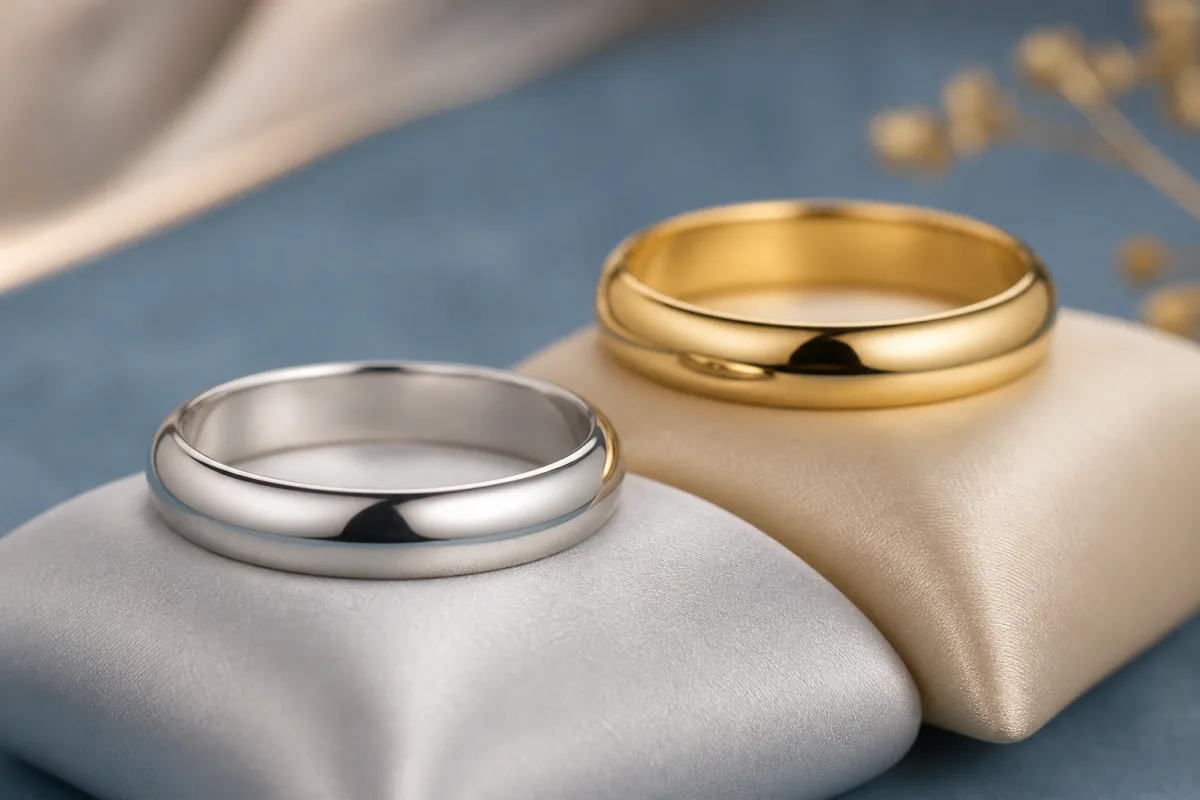
From a metal-content standpoint, 14kt white gold and 14kt yellow gold often have similar scrap value because both contain the same amount of gold. The difference is usually in alloy composition, appearance, and sometimes resale appeal. A white gold ring may be more desirable for certain settings or styles, but the base gold content is still what drives melt value.
That is why articles like 14k Gold Price Today and related price-per-gram guides can be useful for context. They help you understand the metal portion before you consider style or gemstone value.
When retail value is higher than scrap value
Not all 14kt white gold jewelry should be priced as scrap. A clean, wearable piece may be worth more if it has strong design appeal, a known brand, original stones, or a complete matching set. On the other hand, older damaged items without notable design value often trade closer to melt.
Retail or secondhand value may be higher when the piece has:
- Attractive modern design
- High-quality diamonds or gemstones
- Excellent condition
- Popular ring sizes or chain lengths
- Designer or collectible appeal
If gemstones are a major part of the item’s value, you may want to compare with a gemstone-focused resource such as Price of Diamond Over Time to understand how stone value can change the total estimate.
Photo tips for a better valuation request
Good photos help a dealer, jeweler, or appraisal tool make a better estimate. If you are documenting the item for review, take clear images in natural light and include both the whole piece and close details.
- Photograph the front, back, and clasp or inside band
- Capture any stamps or hallmarks in focus
- Include a ruler or scale for size reference
- Show stone settings and any damage
- Take the photo against a plain background
If you want a faster way to organize what you are seeing, the Jewelry Identifier app can help you document and compare pieces before you decide whether to sell, repair, or appraise them.
Quick checklist before you sell or insure
- Confirm the hallmark and note any unusual stamps
- Weigh the item without packaging
- Separate stones if they are removable and clearly identifiable
- Check whether the piece is solid, plated, or gold-filled
- Compare a scrap estimate with a resale estimate
- Get a second opinion for higher-value items
If the item is part of a larger jewelry collection, it can also help to compare value across different metals. For instance, silver pieces may follow different pricing logic than gold, as explained in Sterling Silver Price Today and Sterling Silver Price Per Ounce.
FAQ
Is 14kt white gold worth less than pure gold?
Yes. Since 14kt white gold is only 58.5% pure gold, its melt value is lower than 24kt gold. However, finished jewelry can still sell for more than scrap if it has design or gemstone value.
Does rhodium plating change the 14kt white gold price?
No. Rhodium changes the surface appearance, not the gold content. It may affect how new or worn the piece looks, but it does not increase the intrinsic gold value.
How can I tell if a piece is solid 14kt white gold?
Check for a karat stamp, then verify with weight, wear patterns, and a professional test if needed. A stamp alone is not enough to prove authenticity.
Why do dealer offers vary so much?
Different buyers pay different margins, refining costs, and resale expectations. One buyer may focus on scrap while another may pay more for resale potential.
Should I get an appraisal or sell it as scrap?
If the piece is heavy, damaged, or plain, scrap pricing may be the easiest route. If it has diamonds, branding, or collectible design value, an appraisal is usually worth considering.
Final take
The best way to understand 14kt white gold price is to start with the gold content, then adjust for condition, hallmarks, stones, and market demand. A clear stamp, an accurate weight, and realistic comparisons will usually get you close to a useful value range.
For a practical next step, use the Jewelry Value Finder approach to compare your piece, and if needed, download the Jewelry Identifier app to document details before you sell or appraise it.
Try the Jewelryvaluefinder app
Use the app when you want a faster photo-based check before comparing details manually.