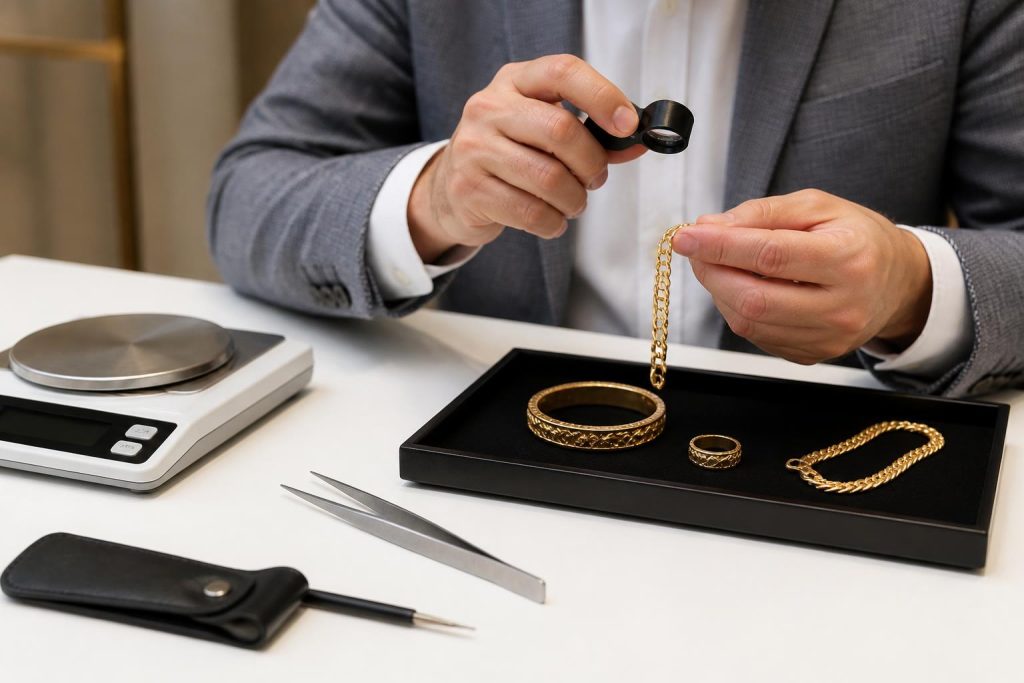
Jewelry Value Guide
Gold Filled Jewelry Value: What It’s Worth and How to Estimate It
Learn how to estimate gold filled jewelry value, what markings mean, which factors affect price, and how to identify whether your piece has resale or scrap worth.
Gold filled jewelry can look close to solid gold, but its value is usually much lower. If you are trying to estimate gold filled jewelry value, the key is knowing what it is made of, how much of it is gold, and whether the piece has any collector or brand premium. In most cases, the gold filled jewelry worth comes from appearance, condition, craftsmanship, and any small amount of metal content rather than from scrap gold alone.
This guide explains how to check the gold filled price in practical terms, what markings to look for, and how to judge the likely gold filled value before you sell, insure, or keep the piece.
For a fast estimate tool, you can also use the Jewelry Value Finder app to help document details and compare similar items.
What “gold filled” means
Gold filled jewelry is not solid gold. It is made by bonding a relatively thick layer of gold to a base metal, usually brass or another alloy. Because the outer layer is much thicker than gold plating, gold filled pieces tend to wear better and last longer than plated items.
That durability is part of why people search for the price of gold filled jewelry. However, the market generally does not value it like karat gold. The base metal is common, and the gold layer is only a fraction of the total weight, so scrap buyers usually pay modest amounts unless the piece has other qualities that improve resale value.
What affects gold filled jewelry worth
The gold filled worth of a piece depends on several factors. A clean, well-made bracelet from a known maker may sell for more than a worn unbranded chain, even if both are gold filled.
| Factor | How it affects value |
|---|---|
| Condition | Bright finish, intact clasps, and little wear usually increase resale value. |
| Weight and size | Heavier pieces may have slightly more material value, but the increase is often limited. |
| Markings | Clear gold filled marks support identification and buyer confidence. |
| Brand or maker | Recognized makers can bring stronger resale prices than generic pieces. |
| Design | Vintage, desirable, or well-crafted designs may sell above metal value. |
| Damage or repair | Broken clasps, missing stones, and heavy wear reduce value quickly. |
How to identify gold filled markings
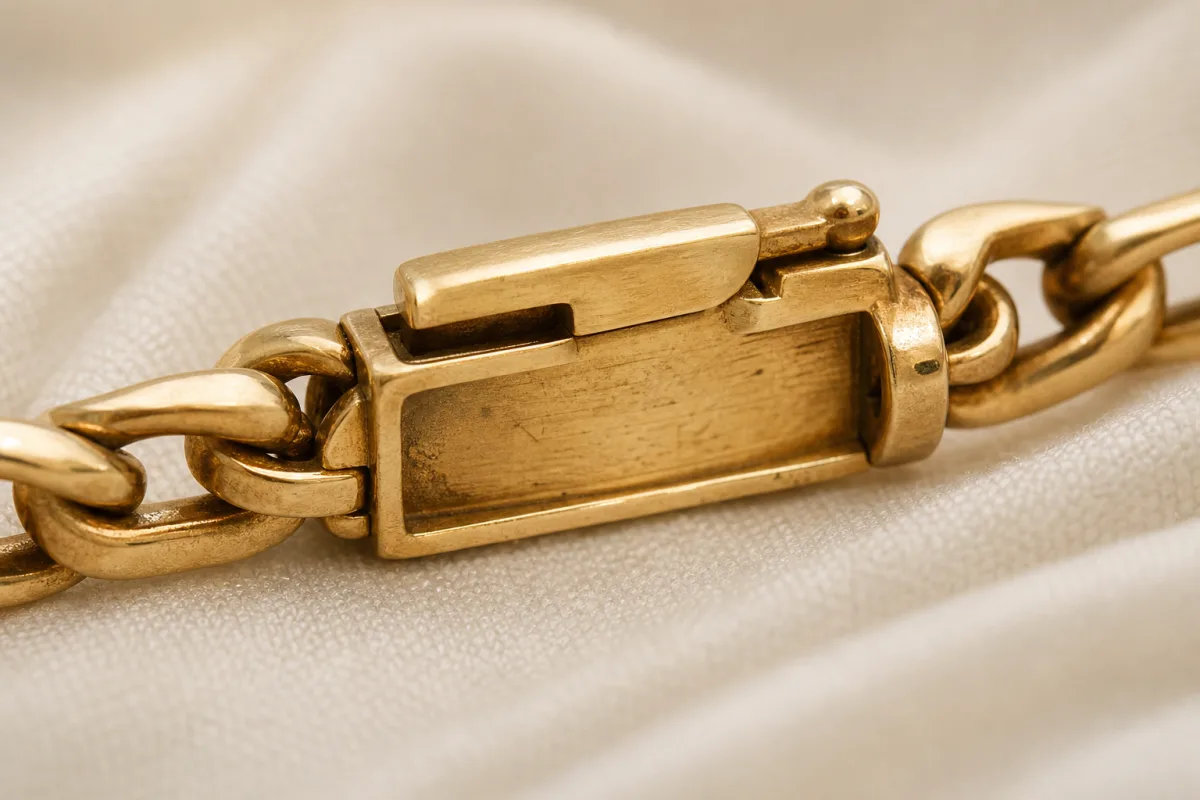
The first step in estimating gold filled jewelry price is confirming that the item is actually gold filled. Look for stamps on the clasp, inside a ring, or on the back of a pendant.
- Gold filled
- 1/20 12K GF
- 1/10 14K GF
- GF
- RGP on some older items, which may indicate rolled gold plate or a related construction
Be careful with markings that are easy to misunderstand. A stamp like 14k HGE is not the same as gold filled. For example, you can review a similar identification issue in this 14k HGE ring value guide. Misreading the mark can lead to overstating the gold filled jewelry value.
How to estimate the value step by step
- Confirm the mark. Check whether the item is gold filled, plated, vermeil, or solid gold.
- Weigh the piece. Use a small digital scale if available. Weight helps with rough comparison, but it does not tell you scrap value by itself.
- Inspect wear. Look for base metal showing through, green discoloration, deep scratches, or corrosion.
- Check for maker marks. Signed or collectible pieces may have a stronger secondhand market.
- Compare similar sold listings. Search completed sales for the same style, not just active listings.
- Separate scrap from resale. A piece may be worth more to a vintage buyer than to a metal buyer.
Gold filled price versus scrap price
People often expect the gold filled price to track gold spot prices closely, but that is usually not the case. The gold layer is too thin for the item to behave like solid gold scrap. The underlying base metal adds little precious-metal value.
That means the gold filled jewelry worth usually falls into one of two categories:
- Resale value for fashion, vintage, or collectible interest
- Low scrap value if the piece is heavily worn or broken
If you are comparing it to other precious-metal estimates, it may help to read about related valuation methods such as 14k gold price today or sterling silver price today. These pages can help you see why gold filled items are valued differently from solid metal jewelry.
Quick comparison: what your piece may be worth
| Item type | Typical market outlook | Value driver |
|---|---|---|
| Gold filled chain in good condition | Modest resale value | Style, length, brand, condition |
| Vintage gold filled brooch or bracelet | Can sell above scrap | Design, maker, collector interest |
| Worn gold filled piece with damage | Low value | Small metal content, condition |
| Gold plated item | Usually very low value | Appearance only, minimal material value |
Photo tips before you sell or ask for an appraisal
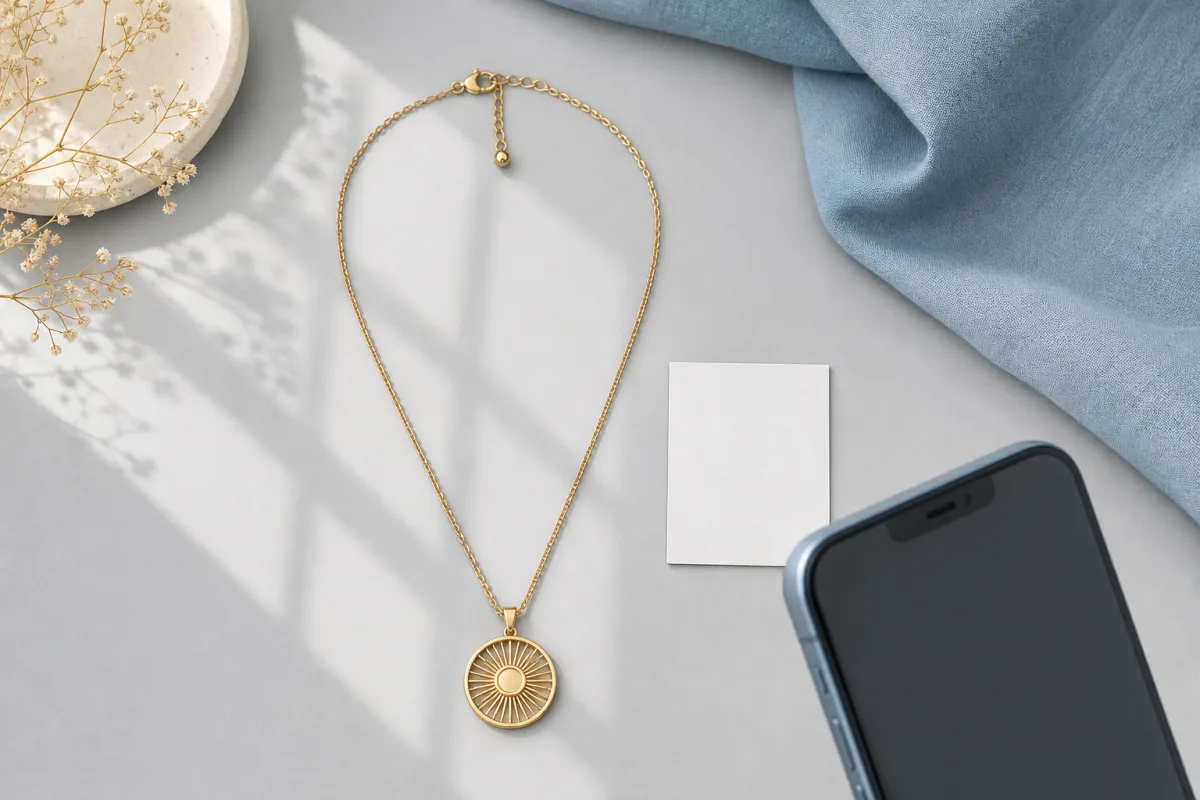
Good photos make it easier to judge the gold filled value and get realistic offers. Before listing a piece or taking it to a buyer, capture the item in bright natural light and include clear close-ups.
- Photograph the front, back, clasp, and any hallmarks.
- Use a plain background and avoid filters.
- Show wear, dents, and missing parts honestly.
- Include one image that shows the full size of the piece.
- If the item has stones or enamel, photograph those details too.
Better photos usually lead to better pricing conversations because buyers can judge condition more accurately.
When to get a professional opinion
If your piece seems unusual, branded, or possibly vintage, a professional appraisal or experienced jewelry buyer may give a better estimate than a simple online search. This matters most when the item could have design value beyond its metal content.
For those situations, a broader jewelry appraisal service guide can help you decide whether formal appraisal is worth the cost.
Practical checklist for estimating gold filled jewelry worth
- Confirm the jewelry is marked gold filled.
- Check whether the mark is clear and consistent with the item’s construction.
- Inspect the surface for wear-through or base metal exposure.
- Look for maker marks and vintage clues.
- Compare sold prices for similar pieces, not just similar materials.
- Price the item as resale first, scrap second.
FAQ
Is gold filled jewelry worth anything?
Yes, gold filled jewelry is often worth something, but usually less than solid gold. Its value depends on condition, style, brand, and whether a buyer wants it for resale rather than metal content.
How much is gold filled jewelry worth for scrap?
Scrap value is usually limited because the gold layer is thin. The exact amount depends on weight, marking, and buyer policies, but many pieces are more valuable as resale items than as scrap.
Does the price of gold filled jewelry change with gold market prices?
Only indirectly. Gold prices can influence buyer interest, but gold filled items do not move like solid gold because they contain far less precious metal.
Can gold filled jewelry be sold as solid gold?
No. Gold filled jewelry should never be represented as solid gold. The marking and construction are different, and buyers expect the correct material description.
What is the easiest way to estimate gold filled jewelry price?
Start with the mark, condition, and style. Then compare sold listings for similar pieces and, if needed, use a jewelry identification app to organize the details before seeking an offer.
Final thoughts
The best way to understand gold filled jewelry value is to treat it as a mix of material, condition, and market demand. In many cases, the gold filled jewelry price is driven more by resale interest than by scrap metal content. If the piece is attractive, wearable, and clearly marked, it may be worth more than you expect.
If you want help organizing the details before selling or comparing items, try the Jewelry Value Finder app for a practical next step.
Try the Jewelryvaluefinder app
Use the app when you want a faster photo-based check before comparing details manually.